
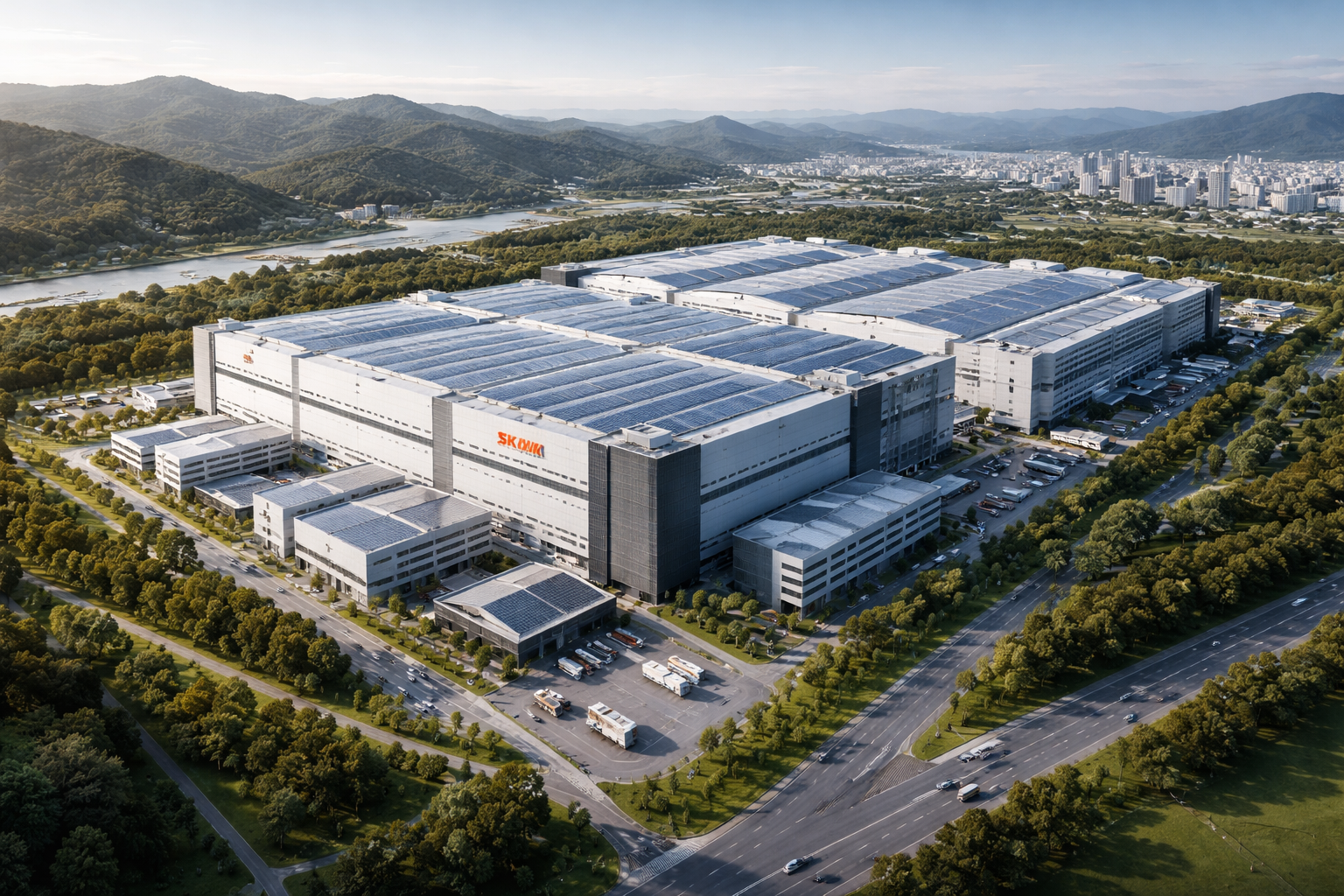
SK Hynix’s record first-quarter profit failed to deliver a bigger lift to the stock on Thursday, as investors weighed whether the AI-driven memory boom can keep running at the same pace.
The South Korean chipmaker posted an operating profit of 37.6 trillion won ($25.4 billion) for the January-March period.
The figure jumped more than fivefold from a year earlier, on revenue of 52.6 trillion won.
Even so, the market reaction was subdued because expectations had already been pushed very high by the company’s run of blockbuster results.
Expectations were already sky-high
The first reason the stock did not get a bigger reward is simple: investors were already positioned for strength.
SK Hynix shares had climbed nearly 90% this year before the earnings release, turning the latest quarter into more of a confirmation event than a fresh surprise.
The stock was down 2.1% in morning trade after the announcement.
Analysts framed the reaction bluntly, saying the results failed to fully impress investors who are questioning how long booming AI memory sales can last.
For a stock that has already rallied so hard, even a record quarter can look like the market was merely getting what it expected.
That is especially true when the company’s profits have been powered by a theme as dominant as AI, where optimism can get ahead of near-term fundamentals.
SK Hynix has become one of the clearest beneficiaries of the global data-center buildout, but that also means its share price is now highly sensitive.
The real debate is durability, not direction
The deeper issue behind the stock’s muted reaction is not whether demand is strong today, but whether it can stay that way.
SK Hynix said customer requests for high-bandwidth memory, or HBM, already exceed its production capacity for the next three years.
That is a powerful sign of demand, but it also underscores the supply bottleneck the company must overcome before the market gives the shares another leg higher.
Chairman Chey Tae-won has also warned that the wider shortage of semiconductor wafers could stretch to 2030 because AI demand is running ahead of supply.
That message helps explain why investors are treating the earnings as proof of a strong cycle rather than the end of the valuation debate.
The market is asking how long pricing power can last if customers are already rushing to secure output for several years ahead.
Capex may rise, but growth still takes time
SK Hynix is trying to answer that question with more investment.
The company plans to lift capital spending beyond last year’s 30.2 trillion won, while expanding capacity through a new chip plant in South Korea and purchases of advanced EUV lithography tools from ASML.
The capital spending is expected to rise significantly this year.
The strategy is logical, but it also comes with a lag: new wafer starts, packaging lines, and equipment take time to translate into sales.
The post Why is SK Hynix stock falling despite record first-quarter profit? appeared first on Invezz
