
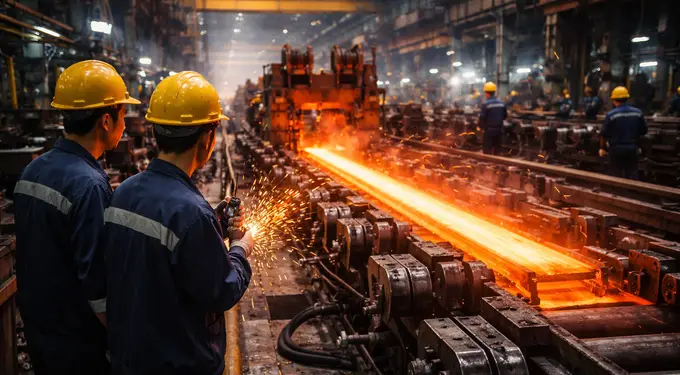
China’s economic momentum weakened sharply in April as factory production, retail spending and investment all fell short of expectations, adding to concerns over the durability of the country’s recovery.
Official data released by China’s National Bureau of Statistics and reported by Reuters showed broad-based weakness across key sectors of the economy, highlighting softer domestic demand and slowing business activity at the start of the second quarter.
Factory output slows more than expected
Industrial output rose 4.1% from a year earlier in April, missing economists’ expectations for a 5.9% increase and slowing from March’s 5.7% growth pace.
The weaker reading suggests manufacturing activity lost momentum amid slowing external demand, cautious domestic spending and ongoing uncertainty across property and export-linked sectors.
Factory production had previously shown signs of stabilisation earlier in the year, but April’s slowdown indicates that the rebound remains uneven and vulnerable to broader economic pressures.
Manufacturing has been one of the stronger pillars of China’s post-pandemic recovery, supported by exports and infrastructure activity.
However, analysts said weakening global demand and softer domestic orders are beginning to weigh more heavily on industrial activity.
Consumer spending remains subdued
Retail sales, a key measure of consumer demand, rose just 0.2% year-on-year in April, well below forecasts for a 2% increase.
The reading also marked a sharp slowdown from the 1.7% growth recorded in March, underlining continued caution among households despite efforts by policymakers to support consumption.
Weak consumer confidence, concerns over income growth and uncertainty surrounding the housing market have continued to restrain spending activity across the economy.
The subdued retail figures suggest households remain reluctant to increase discretionary spending even as authorities roll out targeted stimulus measures and policy support.
Economists said the weak consumption data reinforced concerns that domestic demand is not yet strong enough to offset slowing external conditions and weakness in other parts of the economy.
Investment unexpectedly contracts
Fixed-asset investment, which includes spending on infrastructure, property and manufacturing projects, unexpectedly fell 1.6% in the January-to-April period from a year earlier.
Economists had expected investment to rise 1.6%, making the contraction one of the biggest negative surprises in the latest data release.
The decline reversed the 1.7% increase recorded in the January-to-March period and pointed to softer business confidence and slower capital spending activity.
Investment weakness has increasingly become a concern for policymakers as the property sector continues to struggle and local governments face tighter financial conditions.
Analysts said weaker infrastructure and private-sector investment could place additional pressure on growth in the coming quarters unless authorities introduce stronger stimulus measures.
Recovery momentum comes under pressure
The latest figures indicate that China’s recovery remains fragile despite policy efforts aimed at stabilising growth.
The broad miss across industrial production, retail spending and investment highlights ongoing weakness in domestic demand and suggests that businesses and consumers remain cautious about the economic outlook.
Investors are now likely to focus closely on whether Beijing introduces further policy easing or fiscal support to revive growth momentum.
Markets will also watch for additional measures targeting the property sector, consumer spending and local government financing conditions, which remain key pressure points for the economy.
What investors are watching next
Economists said upcoming data releases will be closely monitored for signs that consumption and investment activity can regain momentum during the second quarter.
Any further deterioration in factory output or domestic demand could strengthen expectations for additional monetary easing or targeted stimulus from Chinese authorities.
For global markets, weaker Chinese growth carries wider implications given the country’s central role in global manufacturing supply chains, commodity demand and regional trade activity.
The April figures reinforce concerns that China’s economic recovery is losing momentum, raising fresh questions about whether current policy support will be enough to stabilise growth through the rest of the year.
The post China’s economy stumbles as factory output and retail sales miss appeared first on Invezz
