
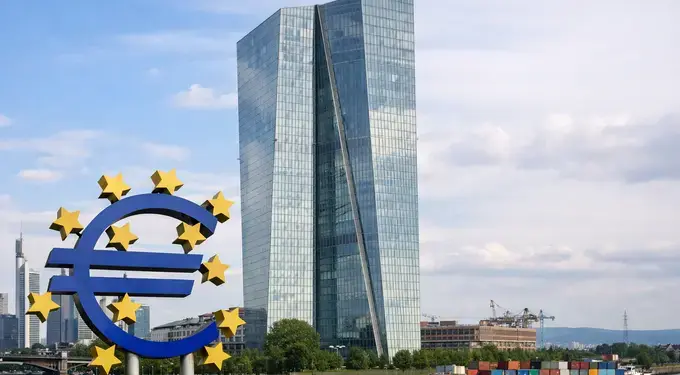
The euro zone has made steady progress in financial integration in recent years, but equity markets across the bloc remain fragmented and continue to lag behind improvements seen in banking and debt markets, according to a European Central Bank report released on Thursday.
The ECB and the European Commission are pushing for deeper integration and the creation of a single market, beginning with financial services.
Policymakers believe stronger integration could direct more household savings into investments and eventually support higher economic growth across the region.
Cross-border financial activity improves
In its biennial report, the ECB said indicators of financial interconnectedness have risen above long-term averages since 2022.
These indicators include cross-border lending, bond holdings, and market spreads.
The central bank attributed the improvement partly to stronger market sentiment in recent years.
The report showed broad gains across bonds, banking, and some segments of capital markets.
However, equity market integration continued to weaken during the same period.
Cross-border investment within the euro zone has fallen to historically low levels, highlighting persistent weaknesses in the bloc’s equity markets.
ECB highlights structural barriers
The ECB said several structural barriers continue to hold back the effectiveness of European capital markets.
“Empirical evidence points to a set of interrelated structural blockages that continue to limit the effectiveness of European capital markets in supporting innovation and long-term growth,” the ECB said in the report.
The report identified fragmented supervision, differing tax systems, and uneven market infrastructure as some of the key obstacles discouraging cross-border investment within the euro zone.
The ECB believes these barriers continue to prevent the development of a more unified and efficient capital market across Europe.
Household savings remain concentrated in bank deposits
The report also highlighted the investment habits of euro area households.
Households continue to keep a significant portion of their savings in bank deposits rather than equities.
The ECB said the relatively low exposure to equities reduces the amount of risk capital available to companies.
This, in turn, limits support for innovation and long-term business expansion across the region.
The central bank backed several proposals put forward by the European Commission, including tax simplification measures, pension reforms, and stronger oversight at the European Union level.
The ECB described these proposals as steps in the right direction toward improving financial integration.
More action needed to deepen integration
Despite supporting the Commission’s proposals, the ECB signalled that stronger and more decisive measures will still be required to remove deeply rooted national barriers.
The report pointed to national corporate laws and securities laws as major obstacles that continue to slow integration efforts across the euro zone.
The ECB warned that without addressing these long-standing structural issues, Europe’s capital markets may struggle to fully support investment, innovation, and sustainable economic growth across the bloc.
The post ECB flags structural barriers slowing euro zone capital market integration appeared first on Invezz
