
Tesla delivered a stronger-than-expected first-quarter performance, but the market reaction underscored a growing disconnect between near-term results and longer-term expectations tied to its artificial intelligence ambitions.
The company reported earnings per share of 41 cents, beating Wall Street estimates of 34 cents, according to Bloomberg data.
Revenue also topped forecasts, coming in at $22.39 billion versus expectations of $21.9 billion, and rising from $19.34 billion a year earlier.
Despite the beat, shares fell about 2.12% in trading, extending a pattern seen in recent quarters where positive earnings surprises have failed to lift the stock.
Tesla shares had similarly dropped after its fourth-quarter results, even as they rose following a weaker-than-expected third quarter, highlighting how investor focus has shifted beyond traditional financial metrics.
Valuation hinges on future AI bets
At the core of the muted reaction is Tesla’s valuation, which remains heavily tied to future projects rather than current earnings.
The stock trades at roughly 185 times expected earnings over the next 12 months, reflecting investor expectations that initiatives such as robotaxis and humanoid robots will drive substantial profits.
However, those returns remain distant. Chief Executive Officer Elon Musk said that meaningful earnings from robotaxis are unlikely before 2027, even as the company operates services in four cities and plans expansion to additional locations in the first half of 2026.
The scale of investment is also rising.
Tesla now expects to spend about $25 billion on capital expenditure this year, up from prior guidance of $20 billion and significantly higher than less than $9 billion in 2025. Free cash flow is expected to turn negative as spending accelerates.
“Lots of bad news despite decent Q1,” wrote Wells Fargo analyst Colin Langan, citing higher capital expenditure, slower robotaxi rollout, and delays to the next-generation Optimus robot.
Execution concerns weigh on sentiment
Tesla’s strategic pivot toward becoming a multi-layered technology company—spanning AI, robotics and autonomy—has raised questions around execution timelines.
The company has flagged slower-than-expected progress in some of its most high-profile projects.
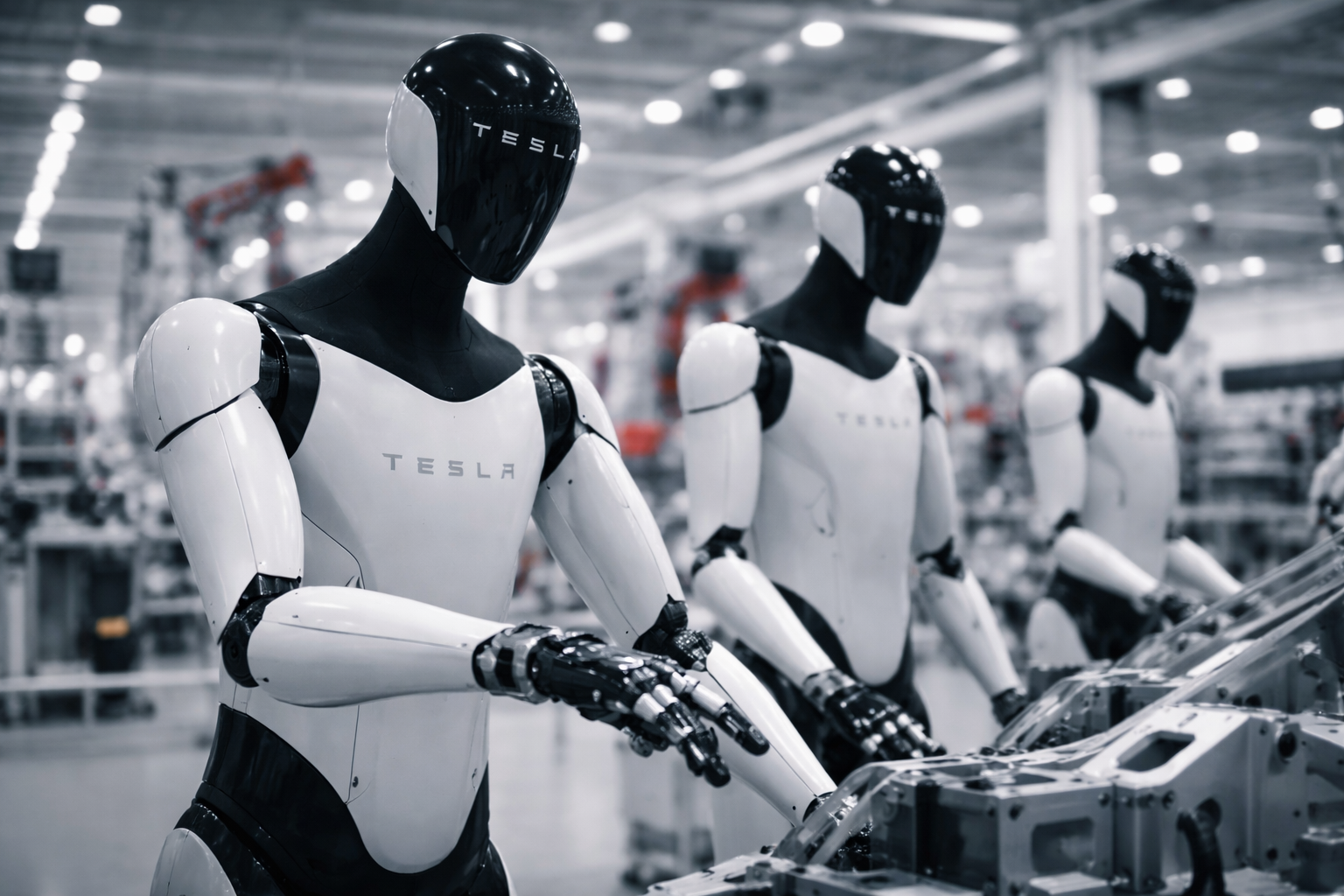
Optimus, Tesla’s humanoid robot, has faced delays, with production timelines described as uncertain.
Musk has said output this year is difficult to predict, while the unveiling of the third-generation Optimus has been pushed to mid-2026.
Similarly, the robotaxi roadmap has seen shifting timelines. While expansion plans have been outlined, the lack of consistency has added to investor caution.
Meanwhile, competition is intensifying, with Alphabet’s Waymo already operating fully autonomous systems across multiple cities.
Tesla has highlighted progress in its Full Self-Driving system, which has surpassed 9 billion cumulative miles, though these are driven under supervision and differ from fully autonomous operations.
Analysts divided as outlook remains intact
Despite the concerns, Tesla maintained its broader outlook, pointing to improving vehicle demand, stronger order backlogs and sequential margin gains.
Production of new models, including the Cybercab and Semitruck, is also underway, while Full Self-Driving adoption has reached nearly 1.3 million paid users globally.
Analyst views remain mixed. Baird analyst Ben Kallo reiterated a positive stance, writing: “No change in outlook,” and adding, “Our takeaway from [the first-quarter report] is that Musk is laser-focused on the laundry list of Tesla’s projects combined with the upcoming SpaceX IPO.”
At the same time, the average analyst price target has edged lower to around $402, reflecting tempered expectations following the results.
For investors, the takeaway is increasingly clear: while Tesla continues to deliver solid quarterly numbers, confidence in its long-term narrative will depend on whether ambitious AI-driven projects begin translating into tangible results.
The post Tesla beats earnings—so why is the stock falling appeared first on Invezz
