
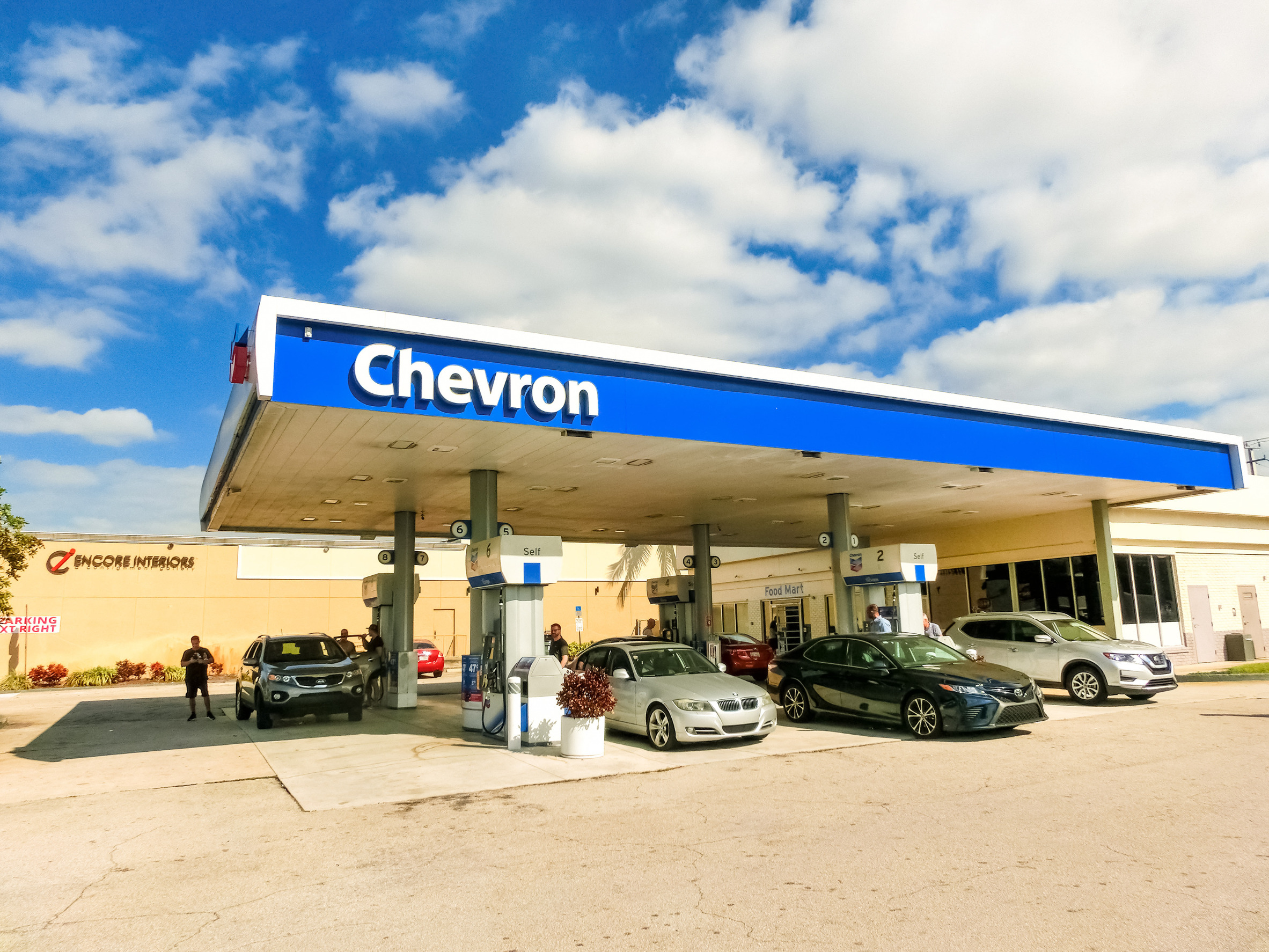
Elevated oil prices, partially linked to the US-Israeli war on Iran, helped Chevron top Wall Street’s first-quarter earnings estimates on Friday, driven by strong results from its upstream business.
The company significantly surpassed expectations, reporting adjusted earnings of $1.41 per share, beating the LSEG consensus estimate of 95 cents.
However, this strong performance was offset by the overall profit hitting a five-year low.
This decline was partially attributed to poorly timed effects related to financial derivatives.
Chevron’s shares fell nearly 1% to $191.54 at the time of writing.
Higher oil prices boost performance
Higher oil prices boosted revenue for Chevron’s upstream segment, the company’s largest business unit, resulting in a 4% year-on-year increase in earnings to $3.9 billion.
“Despite heightened geopolitical volatility and related supply disruptions, Chevron delivered solid first-quarter performance, underscoring the resilience of our portfolio and the value of disciplined execution,” CEO Mike Wirth said in a statement.
Our approach remains consistent – maintain capital and cost discipline, generate strong cash flow and deliver superior shareholder returns.
Mike Wirth
Chief Executive Officer at Chevron
The conflict with Iran, which commenced on February 28, severely impacted worldwide energy markets.
Supply constraints, caused by the near-total cessation of shipping through the Strait of Hormuz, resulted in oil prices surging by up to 50% over the reported quarter.
Chevron’s net income for the January-March period decreased to $2.2 billion from $3.5 billion in the previous year.
However, the company’s limited exposure to the Middle East turmoil—which accounts for less than 5% of its total production—is noteworthy.
Downstream results
Downstream operations saw a significant reversal, moving from a $325 million profit last year to an $817 million loss.
This change was primarily driven by accounting mismatches stemming from derivative-related timing effects, which are anticipated to begin reversing next quarter.
Exxon, a larger competitor, also reported being similarly affected by these timing effects.
Chief Financial Officer Eimear Bonner stated in an interview that Chevron expects paper positions totaling approximately $1 billion to close in the second quarter, generating a profit.
She stated that, while there were typical timing effects in the volatile environment, Chevron’s fundamental business remained robust.
The company indicated that continued increases in oil prices could lead to further timing effects, while a decrease in prices would likely result in subsequent “unwinds.”
Source: Chevron
Minimal Middle East exposure
Chevron’s production exposure to the Middle East is less significant than that of its competitors.
The company also reported strong, sustained production in the US, which has surpassed 2 million barrels per day for the last three quarters.
Volumes in the first quarter saw a slight drop to 3.86 million barrels of oil equivalent per day compared to the prior three months. This decline was attributed to downtime following a fire at the Tengiz field in Kazakhstan.
Free cash flow experienced a negative swing, landing at $1.5 billion, primarily driven by a decrease in operating cash flow.
Even after adjusting for working capital effects, this metric was still lower compared to the same quarter in the previous year.
The company’s goal of achieving a minimum of 10% year-over-year growth in adjusted free cash flow through 2030 was confirmed by Bonner.
Chevron allocated $3.5 billion to dividend payments and executed $2.5 billion in share repurchases during the quarter.
Although the buyback amount was less than the preceding quarter, Bonner confirmed the company’s commitment to its full-year target for share buybacks, which remains between $10 billion and $20 billion.
In the first quarter of 2026, the company’s capital expenditure increased compared to the previous year. This rise was partially a result of investments related to the acquisition of Hess.
However, this increased spending was counterbalanced by reduced expenditure within the Permian Basin.
The post Chevron Q1 beats EPS estimates, shares slip 1% on profit weakness appeared first on Invezz
