
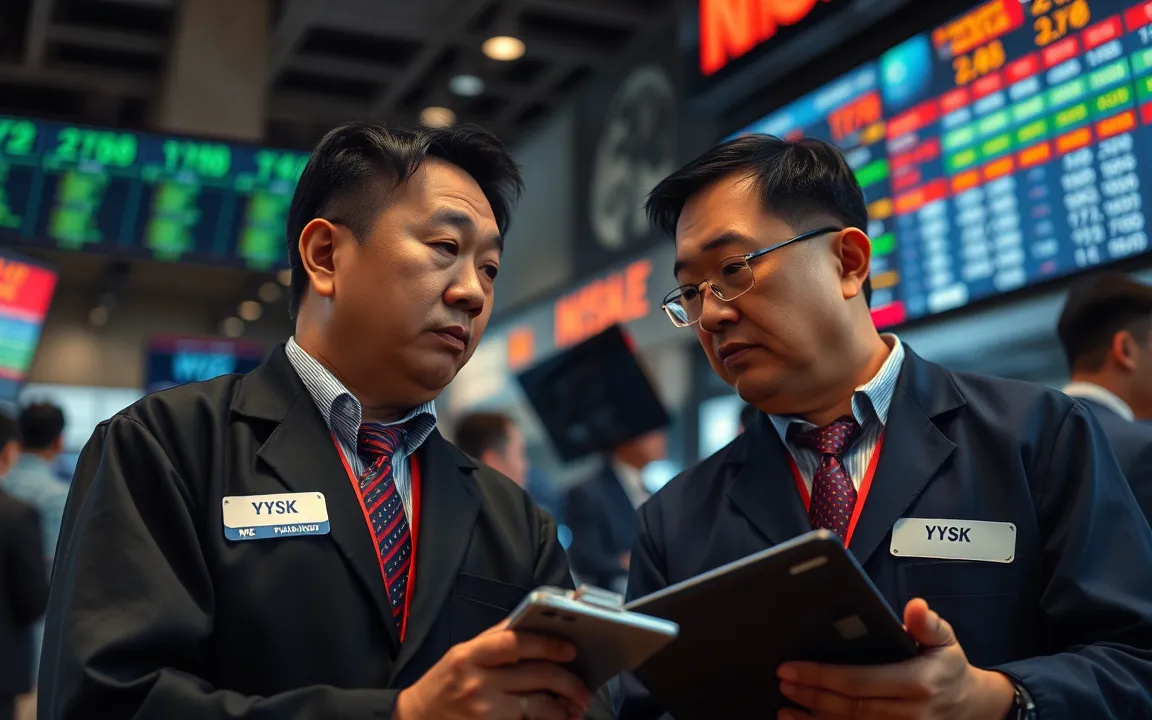
Asian markets traded mixed on Friday as investors balanced optimism over a tentative ceasefire between Israel and Lebanon and the prospect of renewed US-Iran talks against lingering concern about energy supply and the durability of the recent equity rally.
The key change from earlier in the week is that markets are no longer bracing for the open: they are already trading, and the early price action points to a steadier but still cautious tone across the region.
The broader picture remains constructive.
Regional stocks are still on course for a second straight week of gains, helped by lower oil prices, a softer dollar and another record-setting session on Wall Street.
But the early moves also suggest investors are not ready to declare the geopolitical risk premium gone, especially with the latest truce still needing to hold and key supply routes still disrupted.
Asian markets open mixed
MSCI’s broadest index of Asia-Pacific shares outside Japan fell 0.6% in early trade, though it remained near its highest level since early March.
That leaves the region in a somewhat awkward position: the weekly trend is still positive, but Friday’s trading shows investors are taking some money off the table rather than chasing the rally higher at any price.
Japan’s Nikkei eased in early trade after touching record highs in the previous session, which adds to the more cautious regional tone.
Even so, the broader Asia-Pacific benchmark remained on track for a strong monthly gain after a sharp recovery from the heavy falls seen in March.
That rebound suggests investors have become more willing to look through geopolitical shocks, at least when oil is easing and US earnings continue to support sentiment.
Oil slips below $100
Crude was again at the centre of the market story.
Brent fell more than 1% to $98.14 a barrel, dropping back below the $100 mark, while US West Texas Intermediate slipped 1.6% to $93.15.
That move mattered because lower oil prices help relieve pressure on inflation expectations, company margins and household spending.
The fall in crude appears to reflect a modest improvement in confidence around the ceasefire and diplomatic efforts, as well as expectations that the worst immediate supply disruption may be avoided.
Still, traders are not treating this as a clean resolution.
Shipping risks in the region remain a concern, particularly with disruption around the Strait of Hormuz, and the market still wants clearer evidence that de-escalation will hold before stripping out more of the war premium built into energy prices.
Wall Street and currencies support the mood
Asian investors also had a firm lead from the US, where the S&P 500 rose 0.26% and the Nasdaq Composite gained 0.36%, both reaching fresh record highs.
That performance reinforced the idea that markets are still willing to reward risk assets when diplomacy appears to be improving and corporate results keep coming in ahead of expectations.
The dollar added to that supportive backdrop by remaining weak.
The euro held near recent highs at $1.1779, while the Australian dollar stayed close to a four-year peak.
A softer US currency tends to ease financial conditions globally and can provide extra support for equities and commodities alike, particularly in Asia where exchange-rate moves feed quickly into sentiment.
Why caution has not disappeared
Even so, the market’s calm is not the same as confidence.
Investors remain aware that the truce is time-limited and that any setback in talks could reverse the recent improvement in oil and equities.
The International Monetary Fund has already warned that a prolonged conflict involving the US and Iran could damage global growth, and that risk has not disappeared simply because crude has dipped below $100 for now.
This is why Friday’s open feels more measured than euphoric.
Equities are benefiting from the view that the worst-case scenario may be less likely, but the region is still trading with one eye firmly on the headlines.
The recent resilience in equities continues to look stronger than the caution still visible in currencies, commodities and the broader macro backdrop.
What the market is watching now
For the rest of the session, investors are likely to focus on three things.
First, whether oil can stay below $100, because that would help reinforce the idea that inflation risks are easing.
Second, whether the ceasefire holds long enough to persuade markets that a more durable de-escalation is possible.
Third, whether US earnings continue to surprise positively, giving investors a reason to keep favouring equities despite the geopolitical backdrop.
That leaves Asia in a fairly clear but fragile setup.
The post Hang Seng dips as Asian markets balance truce hopes, oil risk appeared first on Invezz
