
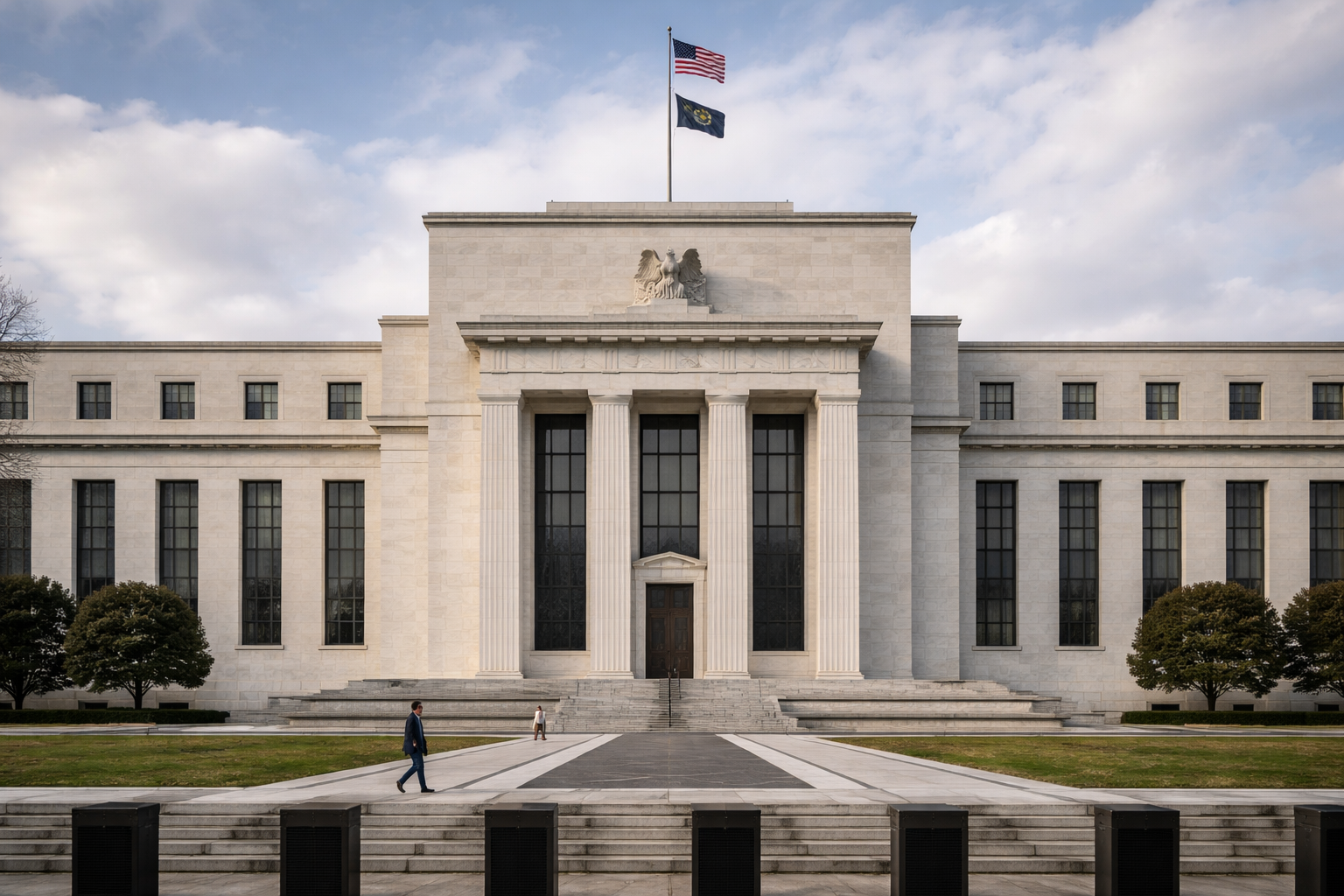
Minutes from the Federal Reserve’s March meeting showed policymakers still expect to lower interest rates this year, even as uncertainty surrounding the Iran war and tariffs clouds the economic outlook.
The record of the March 17–18 Federal Open Market Committee (FOMC) meeting highlighted a delicate balancing act, with officials weighing risks to both inflation and employment.
While most participants saw a path toward easing policy, they also acknowledged scenarios that could require tightening if inflation proves more persistent.
War clouds outlook for inflation and growth
Policymakers noted that escalating tensions in the Middle East could push energy prices higher, potentially feeding into broader inflation while simultaneously weakening economic growth.
“Most participants commented that it was too early to know how developments in the Middle East would affect the US economy and judged it prudent to continue to monitor the situation and assess the implications for the appropriate stance of monetary policy,” the minutes stated.
Officials emphasized the need to remain “nimble” as they assess incoming data, particularly given inflation remains above the Fed’s 2% target and the labor market shows signs of softening.
“The vast majority of participants judged that upside risks to inflation and downside risks to employment were elevated, and the majority of participants noted that these risks had increased with developments in the Middle East,” the minutes said.
The meeting took place weeks after military action involving the US, Israel, and Iran triggered a surge in global energy costs.
Although a cease-fire has since led to a drop in oil prices, policymakers flagged uncertainty over its durability.
Split scenarios: cuts vs hikes
Despite heightened risks, most officials still see rate cuts ahead if inflation continues to ease.
“Many participants judged that, in time, it would likely become appropriate to lower the target range for the federal funds rate if inflation were to decline in line with their expectations,” the minutes stated.
At the same time, several policymakers raised the possibility that inflation could remain elevated, necessitating a different course.
“Some participants judged that there was a strong case for a two-sided description of the committee’s future interest-rate decisions in the post-meeting statement, reflecting the possibility that upward adjustments to the target range for the federal funds rate could be appropriate if inflation were to remain at above-target levels,” the minutes said.
Ultimately, the FOMC voted 11-1 to keep the benchmark rate unchanged in a range of 3.5% to 3.75%.
Labor market concerns grow
Beyond inflation, officials expressed increasing concern about the labor market, which has shown limited job growth outside healthcare-related sectors.
“The vast majority of participants judged that risks to the employment side of the mandate were skewed to the downside,” the minutes stated. “In particular, many participants cautioned that, in the current situation of low rates of net job creation, labor market conditions appeared vulnerable to adverse shocks.“
The minutes also noted that higher oil prices could “reduce households’ purchasing power, tighten financial conditions, and reduce growth abroad,” reinforcing downside risks to employment.
Jerome Powell has separately cautioned against premature tightening, noting that raising rates too early to counter inflation could have negative longer-term effects due to policy lags.
While policymakers still project one rate cut this year, financial markets remain skeptical, with investors largely expecting the Fed to stay on hold.
Meanwhile, slowing economic growth—GDP rose just 0.7% in the fourth quarter of 2025 and is tracking 1.3% in early 2026—has prompted some Wall Street analysts to increase recession expectations.
The post Fed minutes flag 2026 rate cut, war clouds outlook appeared first on Invezz
