
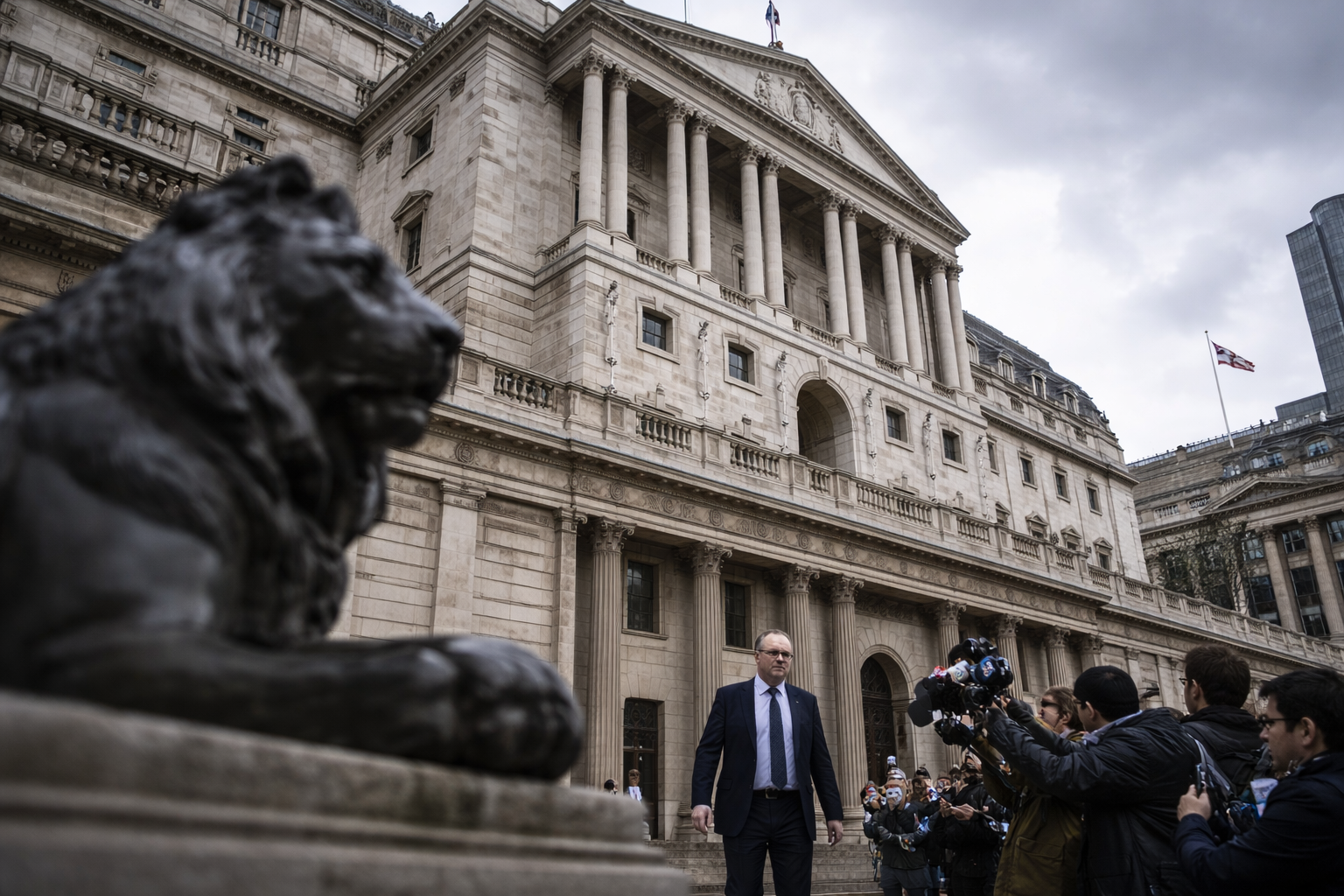
The Bank of England opted to keep its benchmark interest rate at 3.75% on Thursday, meeting market forecasts but revealing a deeply divided Monetary Policy Committee (MPC) as the decision was marked by a narrow 5-4 split.
Despite the hold, the central bank signaled that a further reduction is likely in the coming months, provided that the anticipated sharp decline in inflation proves to be a sustained trend rather than a temporary fluctuation.
The narrow split caught many analysts by surprise.
Four members of the committee voted for an immediate reduction to 3.5%, arguing that the current policy remains too restrictive.
Governor Andrew Bailey emerged once again as the pivotal swing voter.
Having sided with the doves in a narrow December vote to cut rates, Bailey chose to join the majority this time to maintain the status quo, though he hinted at a shifting stance.
“Despite all the uncertainties in the world, we are not currently facing a situation in which monetary policy is being hit by big new shocks,” Bailey said.
According to the committee, CPI inflation had fallen from 3.8% in September last year to 3.4% in December, and was expected to fall back to around the 2% target from April.
Bailey said while he feels more confident regarding the trajectory of wage disinflation, there is still some uncertainty about how the upcoming drop in inflation will impact future wage settlements.
Overall, the risks from inflation persistence appear to have continued to reduce. I therefore see scope for some further easing of policy. This does not mean that I expect to cut Bank Rate at any particular meeting. I will go into the coming meetings asking whether a cut is justified.
Market reaction and inflation outlook
The financial markets reacted swiftly to the dovish undertones of the announcement.
Sterling dropped 0.6% against the dollar to trade at $1.357, while British government bond yields fell as investors increased their bets on a springtime rate cut.
Prior to the meeting, futures markets had priced in a roughly 60% chance of a cut in April; those expectations have since intensified.
The committee noted that CPI inflation has already seen a significant retreat, falling from 3.8% in September to 3.4% in December.
The bank’s projections suggest that inflation will return to the 2% target as early as April.
The bank maintained that the restrictiveness of its policy has already eased, noting that the bank rate has been lowered by 150 basis points since August 2024.
The official statement indicated that on the basis of current evidence, the rate is likely to be reduced further, though judgments on such easing will become closer calls.
A committee divided on persistence
The majority group, consisting of Andrew Bailey, Megan Greene, Clare Lombardelli, Catherine L Mann, and Huw Pill, acknowledged the progress made in disinflation.
While they welcomed the lower near-term outlook, they remained cautious about how these figures would translate into broader wage and price-setting behaviors.
Within this group, Greene, Lombardelli, and Pill argued that a longer period of restriction might be necessary to ensure inflation does not settle above the target.
Conversely, Bailey and Mann showed more concern regarding the risks posed by weak economic activity but ultimately decided the evidence was not yet sufficient to warrant a cut today.
The dissenting four—Sarah Breeden, Swati Dhingra, Dave Ramsden, and Alan Taylor—judged that the risks of inflation persistence had receded materially.
They argued that monetary policy remains too tight and that a cut was necessary to balance the risks of weakening demand.
Market analysts forecast accelerated easing
Philip Shaw, chief economist at Investec, noted that the result was closer than anticipated.
“We thought the would be a clear majority to keep policy on hold for the time being. A low inflation forecast has contributed towards easing some members’ concerns about inflation persistence, concluding that the degree of disinflation process is on track,” he said.
Our forecast has been that the MPC would keep rates on hold until the end of April, but we wouldn’t be surprised if that cut is brought forward.
Lee Hardman, senior currency analyst at MUFG, added that the pound’s sell-off reflects a vote that looked much more dovish than anticipated, suggesting a cut could arrive as early as the next meeting.
The post BoE holds rate but narrow vote fuels expectations of spring rate cut appeared first on Invezz
